-
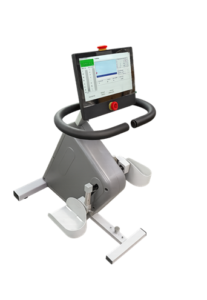
Adaptix Neuro (formerly known as the SMART Cycle — Speed Manipulated Adaptive Rehabilitation Therapy) is an AI-enabled, motor-controlled stationary cycling platform designed to deliver personalized neurorehabilitation therapy.
Unlike conventional exercise bikes or pre-programmed motorized systems, Adaptix Neuro continuously monitors user interaction metrics and dynamically adjusts therapy parameters during the session. It transforms exercise from a passive activity into an intelligent, closed-loop therapeutic intervention.
-
Core System Architecture
Adaptix Neuro integrates:
- Motor-controlled cadence and torque regulation
- Real-time cadence and power sensing
- Physiological monitoring (e.g., heart rate)
- Time-series variability analysis
- AI-driven adaptive control algorithms
At the heart of the system is a closed-loop adaptive controller that evaluates user-bike interaction metrics in short sliding windows and updates motor speed and resistance in real time.
Entropy-Based Interaction Metrics
Research conducted by our team has demonstrated that variability in cadence and power output correlates strongly with motor improvements measured by the Unified Parkinson’s Disease Rating Scale (UPDRS).
Adaptix Neuro computes:
- Approximate Entropy (ApEn)
- Sample Entropy (SampEn)
These metrics quantify the complexity and variability of cycling patterns. Higher variability — when appropriately modulated — has been associated with improved motor outcomes in Parkinson’s patients.
By continuously computing these metrics during exercise, the system can determine whether a session is likely to be therapeutically effective and adjust parameters accordingly.
-
Personalized Predictive Modeling
Adaptix Neuro does not rely on generic therapy profiles. Instead, it uses personalized predictive models trained on historical and real-time data from each user.
These models:
- Map cadence, resistance, and physiological signals to expected motor outcomes
- Compare real-time performance to predicted therapeutic targets
- Optimize session parameters dynamically
This enables both:
- Within-session adaptation (adjustments during the ride)
- Session-to-session adaptation (learning over time)
Goal-Driven Adaptive Therapy
Traditional therapy sets targets before the session begins. Adaptix Neuro continuously refines those targets during the session.
The system dynamically adjusts:
- Cadence
- Resistance
- Session duration
- Effort intensity
This ensures the user remains within an optimal therapeutic window — preventing under-stimulation or excessive fatigue.
Broader Applications
While initially developed for Parkinson’s disease, Adaptix Neuro’s adaptive control architecture is scalable to other neurological conditions, including:
- Stroke rehabilitation
- Multiple sclerosis
- Movement disorders
- Aging-related mobility impairment
Its modular software framework allows expansion to new rehabilitation domains while maintaining the same adaptive core intelligence.
Adaptix Neuro represents a new class of intelligent rehabilitation devices: systems that respond, learn, and optimize in real time.
Intellectual Property
BioMotion’s technology is supported by:
- Peer-reviewed publications
- Issued U.S. patents
- Ongoing IP development related to adaptive control algorithms and therapeutic optimization methods
This IP foundation strengthens our commercial positioning and enhances acquisition potential.